Monday, April 12, 2010

Gram Parsons - Grievous Angel (1974)


The term alt-country didn't exist back in the '70s, but Gram Parsons existed so far outside of the contemporary country music scene he was definitely the "alternative" to Nashville, not just for his associations with The Byrds, The Flying Burrito Brothers and The Rolling Stones; more for his desire to blend country and rock so that the two were blended seamlessly into a more accessible brand of country rock.

This is my favorite of his two solo albums, it really should be labeled "Gram Parson featuring Emmylou Harris" because she absolutely shines on every song; between Gram's heartbreaking pitch and shaky phrasing, Harris' steady and confident vocals sit high up in the mix on top of everything- it's really a beautiful record. 


Surrender To The Air - Surrender To The Air (1996)

Surrender to the Air is the only album from free jazz ensemble Surrender To The Air - an instrumental collective organized by Trey Anastasio of Phish in early '96.
Though never explicitly stated on the record or its notes, the album was a sort of tribute to jazz composer and bandleader Sun Ra, an Anastasio favorite (several of the performers on Surrender to the Air - Allen, Choice and Ray - had performed with Sun Ra).
The album has been out of print since 2000. (from Wikipedia)

The Players:
Marshall Allen, sax
Trey Anastasio, guitar
Kofi Burbridge, flute
Oteil Burbridge, bass
Damon R. Choice, vibes
John Fishman, drums
Bob Gullotti, drums
James Harvey, trombone
John Medeski, organ
Michael Ray, trumpet
Marc Ribot, guitar

The Unicorns - Who Will Cut Our Hair When We're Gone? (2003)


Recipe for making an amazing pop album: add one part broken drum machines, one part toy keyboards, one part concept record about death, one part heavy LSD consumption, mix together in a studio where some/all of the equipment is falling apart/completely fucked-up/useless, fold in some fuzzy guitars, swirl, liberally add some catchy-ass hooks, swirl some more, add a little anti-hipster douchebag-ism, and pour evenly out of your speakers.

This record is what the Flaming Lips would sound like if they had no money (or ProTools. Or massive egos. Or that stupid fucking bubble Wayne Coyne lives inside of.) This record sounds as if it’s about to become a humongous fucking mess every song but manages to not only completely keep it together, it’s as coherent a mesh of 13 songs anywhere on this best-of list.

It’s fun, it’s pop, it’s accessible and inclusive- it takes absolutely all the seriousness and pomp out of “indie elitism”.

Sunday, April 11, 2010

Perrey-Kingsley - The In Sound From Way Out! (1966)


Jean-Jacque Perrey and Gershon Kingsley made space age pop albums before the term electronica ever entered the music-scape, they were considered much too avant-garde to be "pop".

While working for folk company Vanguard Records, Perrey had accumulated hundreds of hours of animal noises and began experimenting with tape loops (before multi-tracking technology you had to do everything by hand, so literally it took days to compose short musical passages with this anti-technology; just scissors and scotch tape!). He was masterful at splicing the magnetic tape to create the desired loop effect; and by speeding up or slowing down the playback he created a synthesized feel to the music. Enter Kingsley; with his composer background and his knowledge of Moog synthesizers (he was the first to play one in a live setting) they created the earliest form of listenable, electronic "pop" music.

So I'm happy to bring to you the very first electro-pop record... 

The Dickies - Great Dictations: The Definitive Dickies Collection (1989)


Before there was punk there was pop, but utilizing pop sensibilities in punk music? 

The Ramones and Buzzcocks immediately come to mind, but let's agree that there's no real starting point and those bands most likely fed off of each other as much as acted as a catalyst for each other.

So, in short- this is arguably, and I love to argue about music so come at me, the first true pop punk record of all time. 

Let's fight.

Lord Finesse & DJ Mike Smooth - Funky Technician (1990)


The copy I used to have of this was a $5 bootleg cassette I bought in the tunnels underneath City Hall in Philly when I was a freshman in high school, circa early '91. We used to cut school and go down and skate Love Park all day, maybe go to South Street, whatever. Hopefully someone would have a boombox, but mostly I would listen to my shitty General Electric walkman (bought with my dad's employee discount). Yeah, this was well before iPods. I used to rock tapes, kid.

Lord Finesse was the leader of the Diggin' In The Crates crew, these guys had records upon records in their repertoire- the samples on which they built their tracks are from thousands of old soul, funk, R&B and jazz records from the '60s and '70s. Back in the day before ProTools, they used to use those Akai MPC samplers. This is a classic from that era, and also one of my faves. Also heralded for its beats, samples and production, this album features Showbiz, Diamond D and DJ Premier. A lot of James Brown is sampled on here, so you know it's got to be funky.

Pump this shit...

Bobby Hutcherson - Dialogue (1965)


The best thing about record shopping for jazz albums is that you have plenty of elbow room; no one listens to it anymore. Well, old dudes and guys like Jimmy Mac do. So, every once in a while I find something that I shouldn't in there, some rare out-of-print limited edition original copy of something, but mostly I'm a listener- I'll leave the collecting to the nerds, I need these records to actually listen to.

You might find a Bobby Hutcherson record, or a record he played on every now and again. Buy it. Even this record, his under-rated debut solo outing. It features no numbers written by Hutch, but just take a look at that line-up! Andrew Hill (composed four of these pieces) on piano, Freddie Hubbard on trumpet, Sam Rivers on sax, Joe Chambers on drums and Richard Davis on bass.

I wish more people listened to jazz...


Songs: Ohia - Magnolia Electric Co (2003)


An album that lies at the intersection of "working class rock, white soul, swamp rock and outlaw country" (according to the one-sheet accompanying this record), Songs: Ohia has been native Buckeye-stater Jason Molina’s singular vision since 1996. His songs of love and hate on here are heralded as a major change for him both lyrically and musically, but ask him and he’ll tell you previous release Didn’t It Rain was the last Songs' record- he leaves behind the spare arrangements in favor of a bigger, fuller sound.

Either way, Molina is channeling the kindred spirits of Springsteen, Neil Young and John Cougar- blue collar country rock with an attitude; a shot and a beer with Jason and his road crew while Hank Williams plays on the jukebox at some hole in the wall in Skokie or Wabash. Guest vocalists Lawrence Peters (doing his best Merle Haggard impression) and Scout Niblett appear on two tracks right in the middle of the record; meshing with the material perfectly.

Oh, and it’s produced by Steve Albini himself, so…

João Gilberto - João Gilberto (1973)


This is the album I listen to after a really tough day at work. João Gilberto (pronounced zhwan) on guitar and vocals, Sonny Carr on percussion. It's soothing and hypnotic in its easy-going, laid-back simplicity. Gilberto's calming voice, understated yet excellent guitar work and Carr's reliance on the bare minimum of a beat is what draws me to the record.

The album has only two originals (Undiú and Valsa) and features tracks from his friends, fellow Brazilians Caetano Veloso, Gilberto Gil and Antonio Carlos Jobim. If the only thing you've ever associated with this man is his album with Stan Getz (Getz/Gilberto; 1964) then get this; missing is Getz's saxophone and string arrangements- all that's left behind is the bones.

And it's entirely in Portuguese!

Saturday, April 10, 2010

The Cure - Seventeen Seconds (1980)

Before they went pop, The Cure was a simplistic band, artless and unpretentious. Here on Seventeen Seconds, we catch the band as a quartet; Robert Smith (the only mainstay of the group, as it was his singular vision that would guide the group up until present time) on vocals, guitar and violin; Simon Gallup on bass; Matthieu Hartley on keys and Laurence Tolhurst on drums. We can see their trajectory from the new wave Three Imaginary Boys album to this and on to the next few albums, reaching lower and lower into darker, more gothic aural landscapes.


At times this record can be both dark and sinister in its downtempo grooves, other times it's propulsive and aggressive. One thing that can be said about this record above all other Cure records is its cohesiveness; all these songs fit with one another like lock and key.

Be careful, this record might just make you miserable- it definitely scared the shit out of me when I was a kid...

King Crimson - Larks' Tongues In Aspic (1973)


This album marks the start of a three album run that defines the very sound, no- the attitude of Robert Fripp's King Crimson. The albums aren't necessarily related in any way (it's not a thematic trilogy per se) but 1973's Larks' Tongues In Aspic kicked off the most adventurous period of this band outside of their 1969 debut In The Court Of The Crimson King.

This is exactly what I think of when I think of '70s prog rock; the over-the-top production, the start-stop drumming, the strange and hard to name instruments (gamelan and mbira, courtesy of percussionist Jamie Muir), the odd time signatures (drummer Bill Bruford quit Yes to join Fripp and his jazzier explorations), the classical flourishes (this album has a lot of viola, violin and flute on it from David Cross) and deep, satisfying bass work from John Wetton.

The main focal point of this record is the title track(s), split into two parts that bookend the album. There are some parts to this record that are insanely heavy and there are others that are ridiculously light and airy. Running throughout the whole thing is a jazz-fusion feel, creating a cohesive quality to the entire work.


John Scofield - A Go Go (1998)


Jazz guitarist John Scofield with John Medeski, Billy Martin & Chris Wood; one of the best studio jazz records of the '90s- there's some really funky shit on this album (everything revolves around the "groove", kids...). 

Medeski Martin & Wood bring their avant-garde background to Sco's modal and hard bop leanings to create one of the most rewarding listens from a jazz guitarist ever.

A must-have for any fans of fusion and/or funk...


Friday, April 9, 2010

Talk Talk - Laughing Stock (1991)


Talk Talk was at first a new wavey synth dance band in the early '80s and morphed into pretentious art-rockers into the '90s, a move that appears (to the label heads at EMI) to be career suicide. I think it's one of the greatest stories of modern music: band makes Duran Duran-esque club tunes, band gets big record deal, band says "fuck off" to synthesizers and '80s excess, band makes three successive records the way they want to make them (1986's The Colour Of Spring, 1988's Spirit of Eden and this album in '91), band loses fans, record deal, etc. Yet band escapes from the industry somewhat unscathed, with suitcase full of money and unflappable creative license to make one of the landmark albums in the post-rock genre. 

I still haven't figured out what post-rock means, but I think this is it. It's actually closer to jazz than anything else. Laughing Stock, if anything- was one of the albums that metaphorically killed the '80s by smashing all barriers associated with what can be considered pop by deconstructing it by its constituent parts and re-assembling it into this sprawling and massive masterpiece.


Thursday, April 8, 2010

KMD - Black Bastards (2001)


You may know KMD through two separate avenues; us old heads know them as the guys who rapped on 3rd Bass' The Gas Face way back in '89 and for also collaborating with Brand Nubian. You new schoolers know them as MF Doom's original group. Either way; KMD never got their due, and this album sat on the shelf for seven years before it was released.

Seven years pass by before this album sees the light of day. After the death of Subroc, causing the end of KMD, his emcee partner (and brother) Zev Love X would go through bouts of severe depression, homelessness and drug abuse before re-emerging and re-inventing himself as MF Doom. And everybody knows who Doom is, and if you don't know you better ask somebody who does, knucklehead.

So here's a forgotten gem of hip-hop goodness...


Richard & Linda Thompson - Shoot Out The Lights (1982)


Whoever said the '80s were a bad decade for music was totally full of shit. Yeah, there was some tragic fashions associated with rock n' roll and probably a little too much cocaine; plus the role of the synthesizer may have been a little overstated, but there was also a ton of fantastic music.

Often overlooked when talking about great guitar players is one Richard Thompson, the brains behind Fairport Convention as well as he and his wife Linda's wonderful (if too short) collaborative recording careers. I'll take I Want To See The Bright Lights Tonight as their best record together, but this one has the honor of being their last together. After spending most of the '70s living in Sufi Islam communes around the world living a deeply spiritual life and trying to keep a music career going while trying to keep a marriage together, the strain proved to be too great a burden on the couple, as their relationship deteriorated sometime between the writing of and subsequent recording of this record (it's incorrectly considered a "break up" album; in fact 6 out of 8 of these songs were written in 1979- the title track is actually about the USSR's invasion of Afghanistan).

Richard's guitar work on sections of this record are quite magnificent (the title track is amazing); give it a listen and decide for yourself where the man fits with the Claptons and the Richards of the world...

Lizzy Mercier Descloux - Press Color (1979)


Lizzy Mercier Descloux was instrumental in bringing Punk and New Wave culture to France during the mid-1970s; striking up friendships with both Richard Hell and Patti Smith on her visits to New York. She would eventually move to NYC smack in the middle of the New Wave/Post-Punk/No Wave phenomenon and contribute to the art scene musically, visually and with her performances (usually combining the two).

Press Color is her debut solo album from '79; and it's one of those records that you have to hear if you're a fan of any of those aforementioned genres. She also flirted with some island riddims as well- this record has some of the best bass lines from that whole time frame. Blondie may have written catchier tunes, the Talking Heads may have been funkier, Television had better guitar work, Patti Smith was more visceral, but this record is the real deal and deserves to be mentioned alongside them.

Don't let this record go the way of the dodo bird and passenger pigeon...


Grachan Moncur III - Evolution (1964)


It's my pleasure to bring you one of my favorite albums of all-time; one look at this line-up and your ears should start watering. Grachan Moncur III as leader and on trombone, Lee Morgan on trumpet (sounding uncharacteristically avant-garde dare I say?), Jackie McLean on alto saxophone (him and Moncur play off each other so well, check out McLean's albums Destination Out! and One Step Beyond for more of their interplay), Bobby Hutcherson on vibraphone (the king of the vibes, hands down), Tony Williams on drums (only 18 at the time of this session and already a seasoned pro) and the ever-steady Bob Cranshaw on bass. This is the perfect aural embodiment of the intersection of post-bop and avant-garde out there.

When I think of what the 1960s actually looked like, this album is it.

Cass McCombs - A (2003)

Down-trodden, melodramatic and mildly stony hyperliterate piano-and-guitar driven indie folk-rock from Bay Area native Cass McCombs

What else do you need to know?

Cecil Taylor - Unit Structures (1966)


This man can play some piano. Cecil Taylor brought something different to jazz in that he approached his instrument differently than anyone before him; his piano was almost like a drum to him- he played it like it was percussion; and in the all-encompassing realm of "free jazz", that works to great advantage here. His idea that tiny fragments of previously rehearsed songs (called "unit structures") could be improvised up into fully realized songs.

So here's Taylor's Unit Structures, a ferocious blend of high-energy and atonal "out sounds"...


Pulp - This Is Hardcore (1998)


The more I listen to Jarvis Cocker's solo work, the more I realize the man is a genius. I've always sided with Morrissey on such matters (I know there's a faux "running feud" between these two men in the British press) but I'm starting to think that Mr. Cocker is almost up to snuff with His Mopeyness. Where Moz insulates himself prior to being hurt and against any and all human interaction; Cocker's lyrics are the words of a man that at one time had been a joyous and free soul but in order to protect himself from the calamities of life, has started to retreat away from such comforts. Or, I may just hear the two all wrong and I'm projecting my shit on to them.

Anyway, Cocker's old band, Pulp, was the springboard for his witty lyricism and black English humor, delivered either with a dry affectation or with that over-the-top theatrics that opera divas have. This album is a chronicle of Cocker's descent; grappling with a serious cocaine addiction as well as the dissolution of a long-time relationship, the album has a darker tone than any of the previous five. Cocker assumes the role of a lecherous douchebag in a few of the songs, suffering from the fallout of trying to keeps himself on the cover of the British tabloids.

So, if things like porn (or this album cover), drugs and fame are bothersome to you, don't download this record... 


Wednesday, April 7, 2010

Fred Frith - Gravity (1981)


A friend of mine turned me on to Henry Cow a few months ago; I was immediately hooked. While doing some reading on them (as I do whenever I find a band I connect with, I have to instantly know everything about them; locations, times, most importantly band members and their backgrounds).

Thus enters Fred Frith- guitarist extraordinaire. After Henry Cow's first record, Frith recorded an album called Guitar Solos, at the time considered a landmark album because of his use of prepared guitars, the method in which items (screwdrivers in the case of Sonic Youth's Lee Ranaldo) are placed between the fretboard and strings. Frith would basically throw a capo on the guitar while adding a bridge at some random spot, in effect giving him two guitars in one. He then placed alligator clips all over the frets, making an infinite number of possibilities and sounds.

Here on Gravity, Frith's first record since Henry Cow broke up, he crafts a fully realized record, utilizing the Swedish band Samla Mammas Manna and American band The Muffins as his backing bands. What I hear is a wonderful pastiche, incorporating every type of music/rhythm/instruments/technology available at the time. Called an "avant-garde dance album" because it actually swings at the same time it confounds the listener; it's a must have for any music collector that considers themselves on this side of "weird". Local notes: Frith now resides here in Oakland and teaches music composition over at Mills College.

This version has some bonus tracks, as it's the re-issued version from 1991...


Gong - You (1974)


Aussie Daevid Allen was one of the original members of Soft Machine but was more or less replaced when his work visa expired and he wasn't allowed entrance back into England, instead seeking refuge in France. He basically lived on a commune and started Gong out of necessity- he needed to make music. And what he made was some of the finest space-prog of the 1970s, incorporating elements of psychedelia and jazz fusion along the way.

They also constructed a whole mythology of Gong; a fantasy world of their own universe. Apparently stemming from a vision Allen had during a full moon trip in 1966- he claims to have seen the future. This is where the "Radio Gnome Trilogy" was born, and out of that the third album of the trilogy was 1974's You. Sadly, this would be the last album featuring the classic line-up until reuniting in 1994, but (as you can probably guess) the magic was gone by then.

This is some seriously tripped-out shit. If you're an acid casualty there's a strong chance that you may get stuck somewhere in this record. Please don't stare at the cover too long...

Tuesday, April 6, 2010

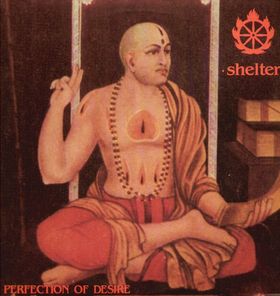
Shelter - Perfection Of Desire (1990)

Shelter is a hardcore punk band from New York City that rose out of the ashes of several other influential bands of that era- on this album we have lead singer Ray Cappo (from Youth Of Today) and Tom Capone, who would later go on to help start Quicksand


Shelter is unique in that they were the originators of the genre Krishnacore, which fused hardcore (and often a brand of melodic hardcore) punk to Krishna consciousness. One of my favorite bands of the early '90s.


Efterklang - Tripper (2004)

I fell asleep to this album every night for about six months straight, a few years ago. It’s kind of unfamiliar as I listen to it awake, I’m sure there’s something in my subconscious it speaks to. I do remember having gentle dreams that gave way to a vivid awareness; first my visions were soft and out of focus, the words half-spoken.

Then cumulus clouds suddenly were forming and disappearing in mere seconds, suns setting and moons rising and then being whisked galaxies away to another planet- there seems to be a conversation going on somewhere above and behind me and I can’t turn fast enough to see where it’s coming from- is that an alien tongue? Maybe it’s Danish. I awaken, completely lost in my surroundings, that groggy half-second before you realize you’re alive and alone in the dark; not quite fright and not quite comfort. Silence. Deafening silence. But there’s an imprint in that silence, a pocket that used to hold a sound.

That sound was Efterklang’s Tripper. Now it’s gone. I’m back asleep...

Monday, April 5, 2010

Fairport Convention - Unhalfbricking (1969)


My favorite Fairport Convention record. This was the second of three albums released in 1969 (today's bands aren't even as good on one record every three years), and this line-up was the best they assembled. Sandy Denny is a goddess, vocally. And Richard Thompson- everything this man touches is golden. Add Ashley Hutchings, Simon Nicol and Martin Lamble; pure Brit-folk rock excellence. This is considered a "transitional" album, being the middle point between the straight ahead folk rock on What We Did On Our Holidays and the more-or-less traditional British folk with Liege & Lief all completed in the scope of less than 12 months.

It's up there with Nick Drake, Bert Jansch, John Martyn, The Pentangle, Steeleye Span and Richard & Linda Thompson's records. Masterpiece...